
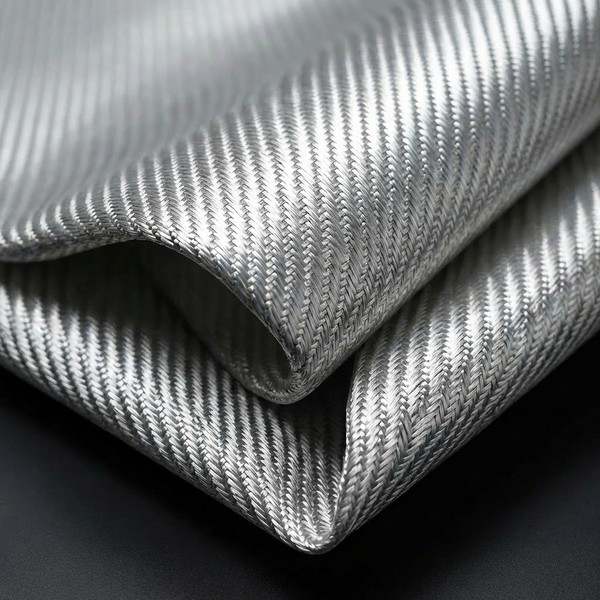
Metal Fiber / Metallic Fabric
800–1200°C
Main applications
completing high-temperature filters and textiles
Key Features
Metal fiber fabric rated above 800°C
Woven stainless or FeCrAl metal fiber — far better mechanical strength than organic or ceramic fiber, with high heat resistance
High-tensile, abrasion-resistant metal fabric
The inherent strength of metal fiber — no fabric failure under repeated flexing and abrasion
High-temperature filter media
A uniform mesh structure — ideal for hot powder and gas filters and molten metal filtration
Electrically conductive
As a metal it is conductive — usable as static dissipative and earthing fabric
A choice of oxidation- and corrosion-resistant alloys
SUS304/316, Inconel, FeCrAl and others — the right metal for the environment
Specifications
| Material | SUS304/316, Inconel 625, FeCrAl metal fiber (by duty) |
| Service temperature | 800–1200°C (by material) |
| Fiber diameter | Approx. 12–50 μm |
| Fabric width | Made to order |
| Mesh open area | Designed by duty (filter or fabric) |
| Main applications | High-temperature filters, heat-resistant fabrics, abrasion-resistant protective material |
Applications
High-temperature filters
- •Hot gas and powder filtration
- •Filters for molten metal and hot liquids
Heat-resistant protective fabric
- •Material for high-temperature gloves and aprons
- •Abrasion-resistant high-temperature protective jackets
Conductive applications
- •Metal fabric for static dissipation and earthing
- •EMI shielding metal fabric
Specialty industries
- •Metal fabric as a high-temperature catalyst support
- •Surface mesh for combustors and burners
Notes
- ※Choosing the alloy: SUS304 for general heat, SUS316 for corrosive service, Inconel above 1000°C, FeCrAl above 1200°C in oxidising conditions.
- ※Fiber diameter and mesh open area directly determine filtration accuracy — tell us the duty and particle size and we will recommend the specification.