
Perlite Insulation
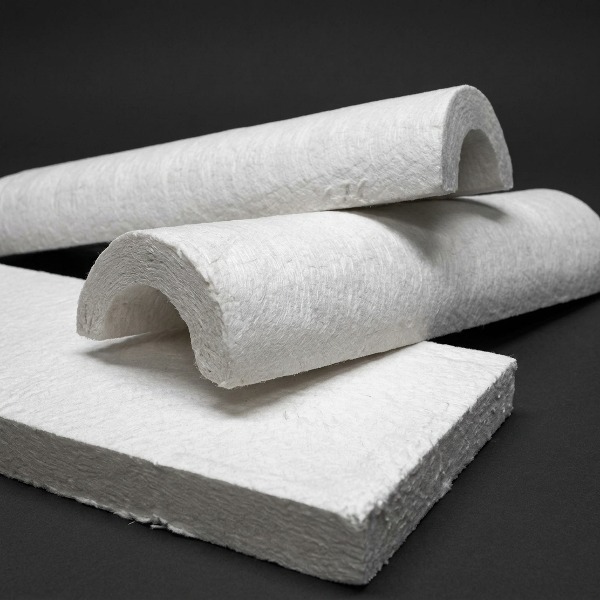
Perlite Pipe Insulation (Shell / Board)
Extreme heat 650–900°CNon-combustibleSteel & process plantInorganic, durable
Service temperature
High tempUp to 650–900°C
Main applications
Expanded perlite pipe insulationservice to 650°C
- non-combustible and inorganic
- for steam and hot fluid lines
- with a non-absorbent binder for long-term durability
Key Features
🔥
Pipe insulation above 600°C
Based on expanded perlite — heat-resistant insulation for pipework above 600°C where organic materials cannot be used
🌡️
Stable and durable at temperature
An inorganic mineral — no shrinkage, distortion or property change under prolonged heat
💧
Water and chemical resistance
Silica-based perlite resists moisture and chemicals, staying durable outdoors and in damp conditions
🧱
Shell and board forms
Cylindrical pipe shells and flat board — chosen to suit the pipework and installation method
💡
Light, low bulk density
The character of expanded perlite makes it light and easy to install, with minimal structural load
Specifications
| Material | Expanded perlite with binder |
| Service temperature | Up to 650–900°C (by binder grade) |
| Density | Approx. 200–350 kg/m³ |
| Form | Pipe shell (cylindrical), board (flat) |
| Thickness | 25T – 100T |
| Main applications | Insulation of hot industrial pipework above 600°C, power station pipe insulation |
Applications
Hot industrial pipework
- •Insulation of hot gas and steam lines above 600°C
- •Hot pipework in steelmaking plant
Energy & power
- •Insulation of hot steam lines in power stations
- •Insulation of hot pipework connected to boilers
Petrochemical plant
- •Insulation of hot process pipework
- •Hot pipework connected to crackers
Industrial furnaces & kilns
- •Insulation finishing on hot gas ducts
- •Insulation of pipework connected to incinerators
Notes
- ※Below 600°C, glasswool and mineral wool are more economical — specify perlite only where it runs hot.
- ※Installing external cladding maximises protection against moisture uptake — essential on outdoor pipework.