
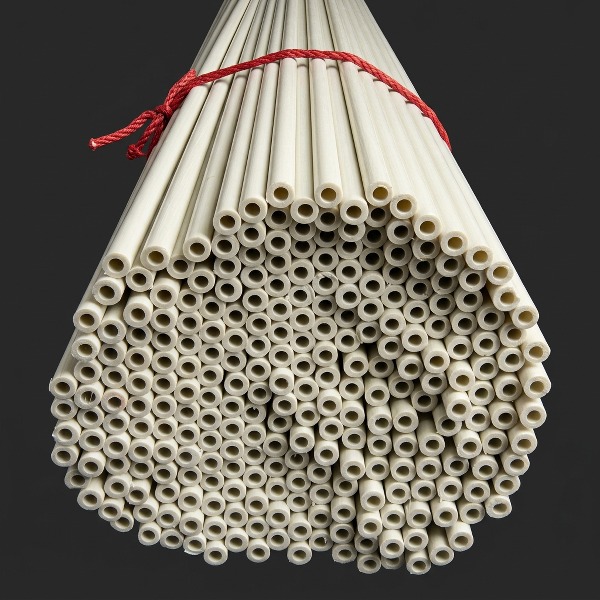
FRP Rod
Up to 120–180°C
Main applications
- FRP rod for light
- corrosion-free structures
Key Features
High-strength lightweight structural rod
Glass-fiber reinforced polyester (FRP) rod — lighter than steel bar at comparable tensile strength, easy to handle and install
Excellent chemical and corrosion resistance
The chemical resistance of FRP — no rust or corrosion in acid, alkali or saline environments
Electrically insulating
Non-conductive FRP — for structures requiring insulation, cable support rods and insulating spacers
Easy to cut on site
Cut with a saw or grinder — quickly worked and assembled to site dimensions
Heat-resistant structural rod (to 180°C)
Epoxy-based high-temperature FRP retains strength within the thermal range of general plant structures
Specifications
| Material | E-glass fiber with polyester or epoxy resin |
| Diameter | ∅6 – ∅50 mm (standard sizes) |
| Service temperature | Up to 120–180°C (by resin grade) |
| Tensile strength | 350–600 MPa |
| Characteristics | Lightweight, corrosion resistant, electrically insulating, non-magnetic |
Applications
Corrosion-resistant reinforcement
- •Corrosion-resistant support rods and reinforcement in chemical plant
- •Structural reinforcement in acid and alkali environments
Electrically insulating structures
- •Insulating support rods in electrical installations
- •Non-conductive spacers in high-voltage environments
Lightweight structures
- •Lightweight support frames for insulation systems
- •Lightweight reinforcing bar replacing steel
Construction & civil reinforcement
- •FRP reinforcing bar in concrete structures
- •Structural reinforcement in non-magnetic environments
Notes
- ※Properties degrade above 120°C — carbon fiber (CFRP) or metal is recommended in hotter service.
- ※Cutting and grinding generate dust — a dust mask and ventilation are essential.