
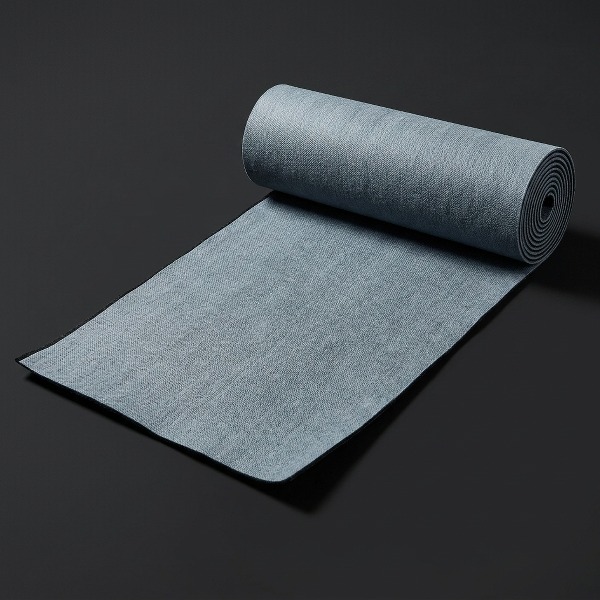
Silicone-Coated Carbon Felt
Up to 400°C
Main applications
high-temperature packing and insulation in one material
Key Features
Carbon felt with a silicone coating
Silicone rubber coated onto a carbon fiber felt substrate — the heat resistance of carbon with the flexibility and elasticity of silicone
Improved elasticity and recovery
The silicone coating adds elasticity — recovering its shape under repeated compression and maintaining sealing long term
Adds vapour and water resistance
The hydrophobic silicone coating blocks moisture — a packing and sealing material for damp, hot environments
Tunable conductivity
Adjusting the silicone coating thickness gives either an insulating (thick coating) or semi-conductive grade
Freely cut and formed
As a composite felt it is cut with a knife or laser and shaped into gaskets, pads and packing
Specifications
| Material | Carbonised carbon fiber felt with silicone rubber coating |
| Service temperature | Up to 400°C (by silicone coating thickness) |
| Thickness | 3–30 mm |
| Coating thickness | 0.2–1 mm (by duty) |
| Key properties | Heat resistance, elasticity and water resistance combined |
| Main applications | High-temperature gaskets, sealing packing, insulation pads |
Applications
High-temperature gaskets & packing
- •Elastic gaskets for hot flanges
- •Door seal packing for ovens and kilns
Insulation & heat dissipation pads
- •Contact insulation pads on hot equipment
- •Heat-dissipating insulating pads for electrical equipment
Vibration absorption
- •Cushioning pads in hot, vibrating service
- •High-temperature anti-vibration packing for machinery
Specialty uses
- •Gasket material for fuel cell stacks
- •Packing material for semiconductor heat treatment
Notes
- ※Adds elasticity and water resistance over plain carbon felt — the first choice over carbon felt where sealing is the goal.
- ※Service temperature depends on the silicone coating thickness — tell us your temperature and pressure and we will recommend a specification.