
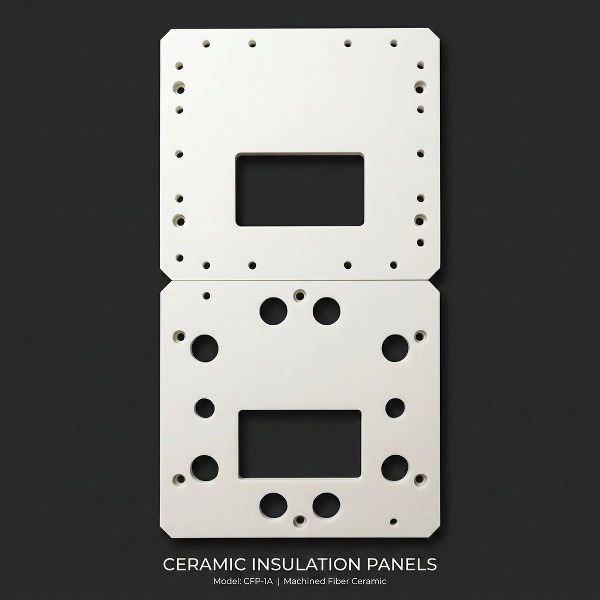
Ceramic Plate
1200–1800°C
Main applications
ceramic plate for the hottest points
Key Features
Extreme heat resistance above 1200°C
Sintered ceramic plate — insulation and dielectric performance beyond the limits of organic and other inorganic materials
Dielectric performance at temperature
The high-temperature insulating character of ceramics — ideal for electric furnaces and heater insulation
High mechanical strength
The hardness and compressive strength of sintered ceramics — holding form under mechanical shock and load
Oxidation and slag resistance
Properties remain stable in oxidising atmospheres and on contact with slag
Precision machinable
Machined with CNC and diamond tooling — custom-shaped insulating components can be made
Specifications
| Material | Alumina (Al₂O₃), silicon nitride (Si₃N₄), zirconia and others (by grade) |
| Service temperature | 1200–1800°C (by material) |
| Thickness | 2T – 50T (custom available) |
| Standard sizes | 50×50 mm to 300×300 mm (custom cutting) |
| Key properties | Heat resistance, dielectric strength, oxidation resistance, high mechanical strength |
| Main applications | Insulating plates for electric furnaces and heaters, sintering jigs |
Applications
High-temperature electrical plant
- •Insulating ceramic plates for electric and MoSi₂ heater furnaces
- •Insulating supports for high-temperature resistance heaters
Sintering & ceramics manufacture
- •Sintering jigs and setter plates
- •Insulating substrates for firing trays
Semiconductor & display
- •Insulating substrate material for high-temperature processes
- •Insulating jigs inside heat-treatment equipment
Specialty industries
- •High-temperature insulating components for aerospace
- •Ceramic components for nuclear fuel sealing
Notes
- ※Heat resistance and dielectric performance vary with alumina purity (95%–99.9%) — tell us the environment and we will recommend the grade.
- ※Ceramics are brittle — protect from impact during transport and installation.