
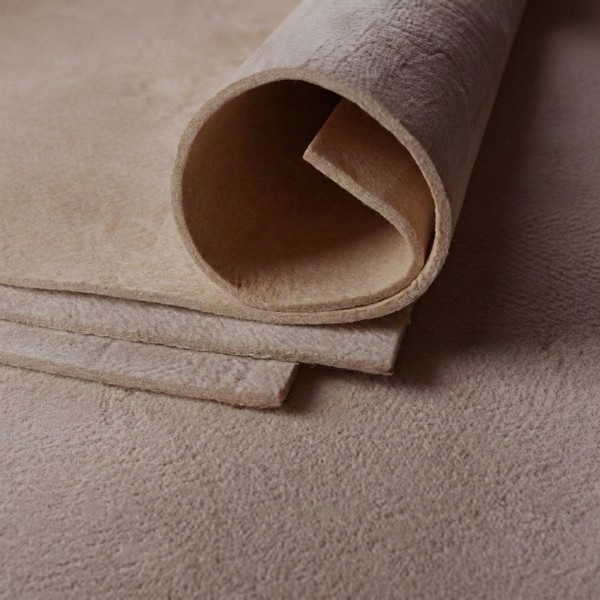
Aerogel Sheet
−200°C to 650°C
Main applications
- one-fifth the thickness of conventional insulation
- covering everything from −200°C LNG service to 650°C plant in a single material
Key Features
The world's lowest thermal conductivity (λ ≈ 0.015 W/m·K)
A nano-porous aerogel structure — matching glasswool and mineral wool at three to five times less thickness
An extraordinary range: −200°C to 650°C
From LNG cryogenic lines to 650°C plant — a single material covering the whole temperature range
Ultra-thin, ideal for tight spaces
High performance at 5–20 mm — fitting where conventional insulation cannot be installed at all
Hydrophobic surface treatment
A hydrophobic surface means no moisture uptake, so insulation performance stays stable long term
Freely cut, easy to install
Supplied as sheet — cut instantly with scissors or a knife and fitted tightly to pipes, valves and complex shapes
Specifications
| Material | Silica aerogel and glass-fiber composite sheet |
| Thermal conductivity | λ ≈ 0.013–0.018 W/m·K (at 25°C) |
| Service temperature | −200°C to 650°C (by grade) |
| Thickness | 5 mm, 10 mm, 15 mm, 20 mm |
| Width | 1000–1500 mm (roll supply) |
| Main applications | Pipe insulation, LNG and cryogenic insulation, hot plant insulation, tight-space insulation |
Applications
Cryogenic plant (from −200°C)
- •Cryogenic insulation of LNG storage tanks and piping
- •Insulation of liquid nitrogen and oxygen lines
Hot industrial plant (to 650°C)
- •Ultra-thin insulation of hot and steam piping
- •Improving the external insulation efficiency of furnaces and ovens
Confined spaces
- •Insulation in plant rooms and confined ship spaces
- •Reinforcing external wall insulation systems (EIFS)
Specialty equipment
- •Thermal management insulation in EV batteries
- •Insulation of semiconductor and battery process equipment
Notes
- ※Three to five times the performance of conventional insulation at the same thickness — the real value is the reduction in insulation layer depth.
- ※To preserve the hydrophobic surface, minimise direct contact with standing water — a vapour wrap is recommended where needed.