
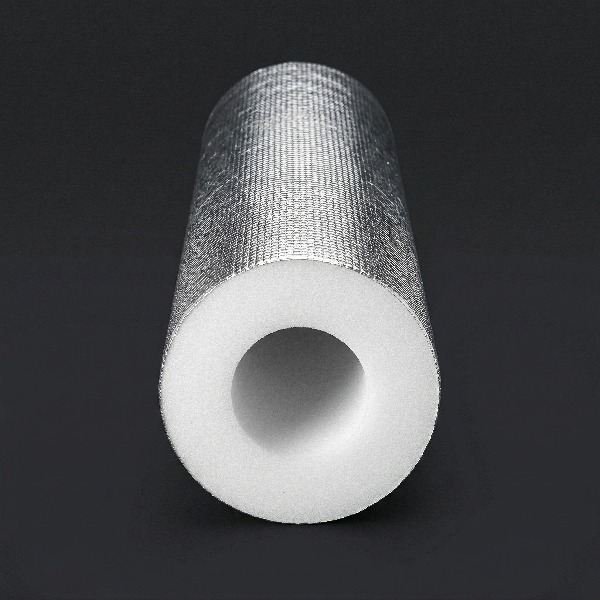
Sanitary & Cleanroom Insulation
Foil-Faced Basofoam
95% radiant reflectanceDual insulation barrierGMP & cleanroom suitableIntegrated foil finish
Service temperature
Medium-high−40°C to 200°C
Main applications
Polyolefin foam laminated to aluminum foil−40°C to +200°C
- 95% radiant reflectance
- blocking conduction and radiation together
- a single-layer insulation finish for GMP environments
Key Features
🪞
Reflective insulation built in
Basofoam laminated to aluminum foil — conduction control and radiant reflection in one layer
💧
A complete vapour and water barrier
The aluminum foil vapour layer blocks moisture entirely, preventing moisture degradation of the insulation
🌡️
A wide range for hot and cold
−40°C to 200°C — covering chilled water, hot water and steam piping
✨
A clean finished appearance
The foil finish means no separate cladding is needed when used as a pipe insulation finish
✂️
Cut and installed on site
Supplied as sheet or roll — cut immediately on site and fitted tightly to complex pipework
Specifications
| Construction | Steam-expanded polyolefin laminated to aluminum foil |
| Service temperature | −40°C to 200°C |
| Thickness | 10T – 30T (including foil) |
| Thermal reflectance | Approx. 95% (aluminum foil) |
| Supply form | Roll or sheet |
| Main applications | Foil-finished pipe insulation, hot and chilled water insulation, vapour-tight insulation |
Applications
Pipe insulation finishing
- •Foil-finished insulation on hot and chilled water lines
- •External insulation finishing on HVAC pipework
Condensation control
- •Condensation-control insulation on chilled water lines
- •Blocking condensation on HVAC pipework
Reflective insulation
- •Radiant reflection insulation for roofs and walls
- •Reflective insulation material in buildings
Refrigeration & cold service
- •Pipe insulation finishing in cold stores
- •Insulation sheet for refrigeration equipment
Notes
- ※Install with the foil face outward (toward the heat source) to maximise the reflective effect.
- ※Seal joints with the dedicated foil tape to maximise the vapour barrier.