
Aerogel insulation costs three to five times more than conventional materials. Even so, adoption is growing quickly in LNG plant, shipbuilding and petrochemicals — not simply because it is a good product, but because under particular conditions it is also the economical choice.
What is aerogel?
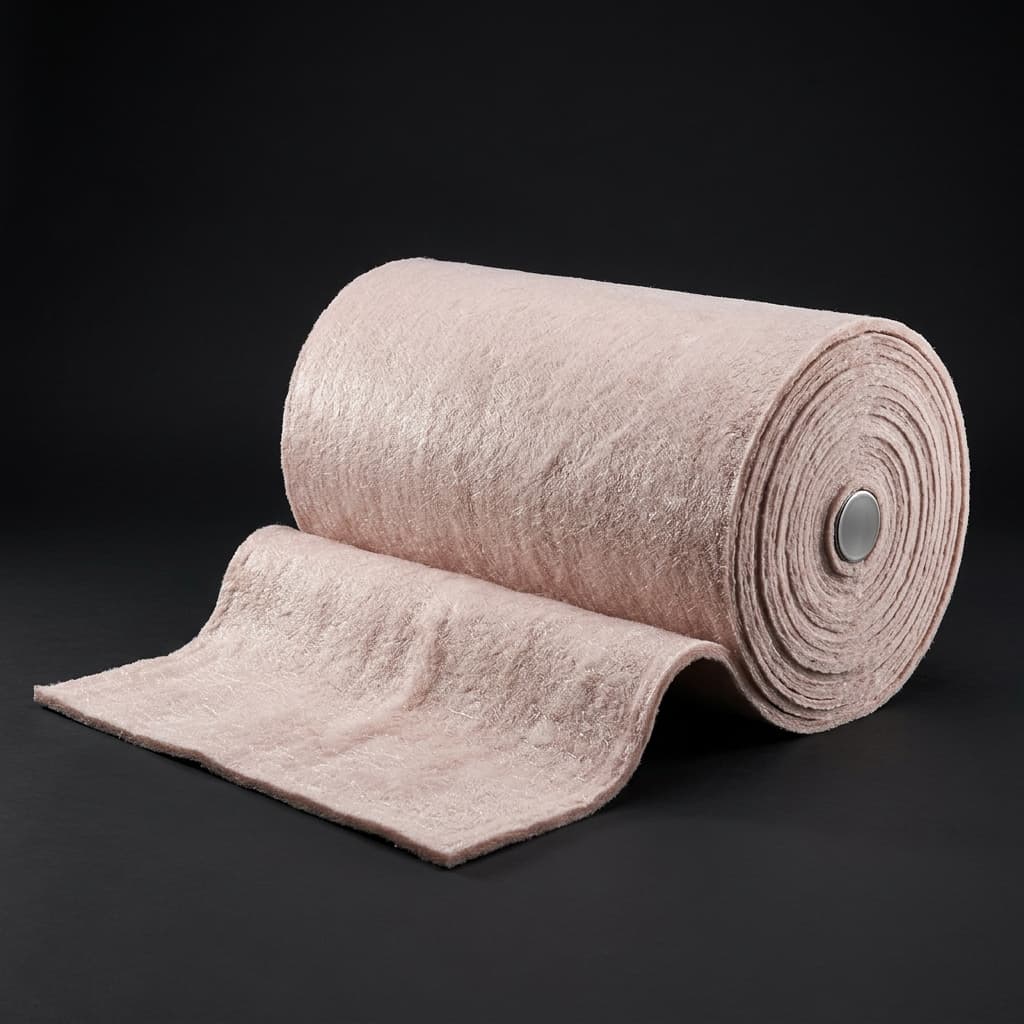
Aerogel is an ultra-light, high-performance insulation whose nano-porous structure is roughly 95% air. Originally developed as a NASA spacesuit material and since adapted for industry, it has the lowest thermal conductivity of any commercially available insulation.
Performance compared
| Aerogel felt | λ ≈ 0.015 W/mK (at 25°C) |
| Glasswool (32K) | λ ≈ 0.033 W/mK |
| Mineral wool (80K) | λ ≈ 0.030 W/mK |
| PIR urethane | λ ≈ 0.022 W/mK |
| Cerakwool (64K) | λ ≈ 0.040 W/mK (at 300°C) |
The lower the thermal conductivity, the better the insulation at a given thickness. Aerogel is about twice as effective as glasswool, achieving the same performance at half the thickness.
When aerogel is the right choice
- Space constraints: where pipe spacing is too tight for thick insulation
- LNG and cryogenic lines: performance holds from −162°C to −196°C
- Hot pipework: usable up to 650°C
- Condensation control: low absorption minimises condensation and corrosion risk
- Lightweight design: where pipe loading must be minimised
- Lower maintenance cost: long life and extended replacement intervals
The economics — when the premium pays
Aerogel's initial cost is high, but on a total cost of ownership basis it can be the better choice: (1) reduced thickness frees up installation space and avoids redesigning pipe runs; (2) in cryogenic service, reduced boil-off cuts energy cost; (3) longer replacement intervals reduce maintenance cost over the life of the plant; (4) the weight saving avoids additional supports and structure.
When aerogel is unnecessary
- General ambient (20–80°C) pipe insulation — glasswool is more economical
- Where there is no thickness constraint and the budget is limited
- Purely acoustic applications — glasswool or mineral wool is better suited
✅If you are unsure whether aerogel is right for your application, tell us the service temperature, pipe size and current insulation thickness, and our engineering team will prepare a comparative quotation against conventional insulation.
Need a product quote or technical advice?
Our specialists will respond with a quotation quickly
Related Technical Guides
Technical Guide
Cryogenic Pipe Insulation — Selection Criteria for LNG and Liquid Nitrogen Lines
Technical Guide
Steam Pipe Insulation — Cutting Heat Loss and Energy Cost
Technical Guide
Preventing Condensation — Dew Point, Vapour Barriers and Material Choice
Technical Guide
Elastomeric Foam Insulation — NBR, EPDM and Atiron for Condensation Control