
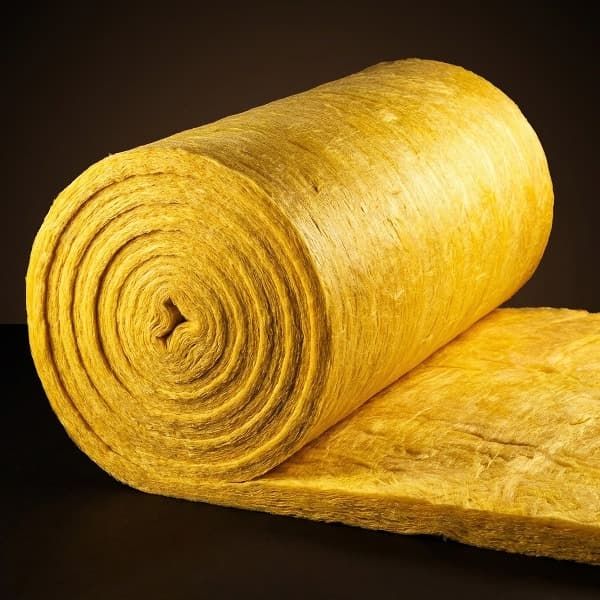
Buying glasswool, you will come across figures like 24K, 32K, 48K and 64K. The number is density in kg/m³, and the higher it is, the more densely packed the fiber. Higher is not automatically better — choosing the density that matches the application is what gives you the best performance for the money.
What does the K number mean?
The K number is the weight in kilograms of glass fiber in one cubic metre. 24K = 24 kg/m³, 64K = 64 kg/m³. As density rises the fiber packs more tightly, raising mechanical strength and acoustic performance — but thermal performance does not necessarily improve in proportion.
Properties by density
| 24K (24 kg/m³) | λ 0.036 W/mK / most flexible / lowest price / roll and blanket |
| 32K (32 kg/m³) | λ 0.033 W/mK / the general-purpose standard / blanket and pipe sections |
| 48K (48 kg/m³) | λ 0.031 W/mK / good shape retention / board and pipe covers |
| 64K (64 kg/m³) | λ 0.030 W/mK / highest mechanical strength / board and external wall insulation |
24K — most flexible, lowest cost
- The lightest and most flexible — easy to wrap around curved pipework and complex shapes
- The cheapest — significant savings on large installations
- Excellent sound absorption — for duct interiors and acoustic panels
- Low shape retention — can sag when installed vertically
- Main uses: filling building walls, wrapping ducts, acoustic material, wrapping pipework
32K — the industrial standard
- The best balance of thermal performance and price
- The most common density for pipe sections (self-seal covers)
- Widely used as blanket on industrial pipework and ductwork
- Main uses: industrial pipe insulation, duct insulation, building insulation, glasswool board
48K — shape retention, mid-range strength
- Better shape retention than 32K — an advantage on vertical and ceiling installations
- Widely used as pipe covers (sections)
- Moderate mechanical strength — can be installed exposed without facing
- Main uses: pipe sections, external wall insulation board, cold store insulation
64K — the highest mechanical strength
- The stiffest, with the best shape retention
- Usable as walkable roof insulation
- Thermal conductivity differs little from lower densities — it is chosen for strength
- The most expensive
- Main uses: roof insulation board, external wall insulation board, acoustic barrier panels
Recommended density by application
| Pipe wrapping and sections | 32K or 48K — the most common |
| Duct insulation | 24K (flexibility) or 32K (shape retention) |
| Filling building walls | 24K – 32K |
| External wall insulation board | 48K – 64K — shape retention required |
| Roof insulation | 64K — supporting foot traffic |
| Acoustic treatment | 24K – 32K — lower density absorbs better |
✅Tell us the pipe size, the installation orientation (horizontal, vertical, ceiling) and whether facing is needed, and we will specify the right density and thickness. Enquiries: +82 10-4266-9745
Need a product quote or technical advice?
Our specialists will respond with a quotation quickly
Related Technical Guides
Technical Guide
Silica Materials — Fabrics, Felts and Ropes for Service Above 1000°C
Technical Guide
Acoustic Insulation Explained — Absorption vs Blocking, NRC and Density
Technical Guide
Insulation Service Life — When Should It Be Replaced?
Technical Guide
Insulation Performance Compared — Thermal Conductivity, R-Value and Thickness