
Ordinary glass fiber tops out around 350°C, and Cerakwool can be a burden where dust must be controlled. When you need something between the two — a flexible textile that holds above 1000°C — silica is the answer. It is used everywhere from welding blankets to expansion joints on hot plant.
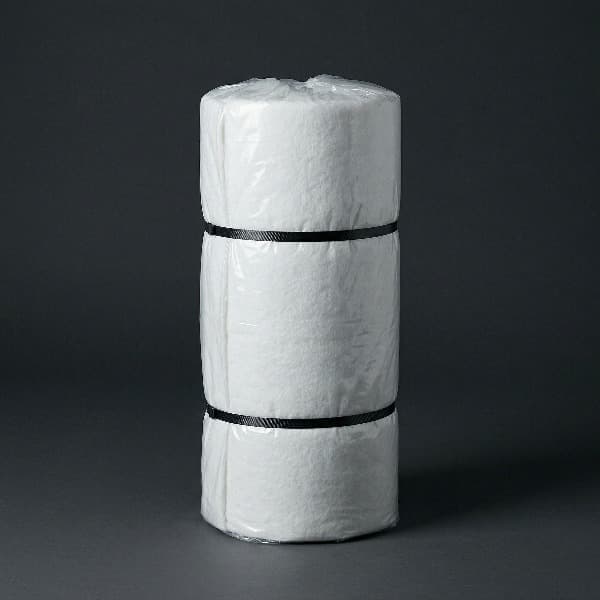
What are silica materials?
Silica materials are glass fibers from which alkali and other impurities have been leached, raising silicon dioxide (SiO₂) purity to an extreme degree. The higher the purity, the higher the heat resistance, covering the range ordinary glass fiber cannot reach.
- Main component: high-purity silicon dioxide (SiO₂)
- Forms: fabric (cloth), felt and mat, sleeve and tube, rope, belt, yarn (sewing thread), bulk wool
- Characteristics: holds its form at extreme temperature and is flexible enough to wrap complex shapes
- Non-combustible — does not burn even in direct flame
- Resistant to molten metal spatter and welding sparks
Temperature range — compared with other materials
| Glasswool (glass fiber) | To 350°C — the standard for general pipe and duct insulation |
| Mineral wool (rock wool) | Above 600°C — medium- to high-temperature plant, excellent fire performance |
| Silica materials | Above 1000°C — retaining flexibility in textile form |
| Cerakwool (RCF) | 1100–1430°C — the highest range, for furnace linings |
| The deciding point | Need extreme temperature in a flexible textile → silica. Need furnace wall insulation → Cerakwool |
✅Silica and Cerakwool are not competitors but different roles. Cerakwool insulates the inside of a furnace; silica excels at wrapping and shielding as a flexible textile. In practice they are often used together.
Uses by form
| Silica fabric (cloth) | Welding blankets, high-temperature curtains, insulation jacket skins, expansion joints |
| Silica felt and mat | Insulation filling in hot plant, insulating furnace hatches and doors, heat shielding |
| Silica sleeve and tube | Protecting cable and hose in hot areas — shielding from radiant heat and spatter |
| Silica rope | Sealing furnace doors and hatches, filling hot gaps |
| Silica belt | Conveyor belts in hot transport, firing and annealing furnaces |
| Silica yarn (sewing thread) | Sewing high-temperature jackets and covers — ordinary thread simply melts |
Where it is used
- Welding and cutting areas — spark blankets and fire curtains
- Steel and foundry work — blocking molten metal spatter, protecting around ladles and tundishes
- Power generation and incineration — expansion joints in hot ducts, exhaust line insulation
- Heat-treatment and firing furnaces — hatch sealing, door insulation, conveyor belts
- High-temperature insulation jacket skins — the outermost layer on 1000°C-class jackets
What to confirm when specifying
- Distinguish continuous service temperature from peak temperature — they are not the same
- Whether there is direct flame or molten contact — if so, higher purity and thickness are needed
- Mechanical abrasion and tensile conditions — conveyor belts need a strength specification
- Whether a coating is needed — silicone or vermiculite coating adds abrasion and water resistance
- Use silica yarn where sewing is required — ordinary thread fails at temperature
⚠️Silica products can give off smoke and odour on first use as the organic binder burns off. This is a normal burn-out process — ensure adequate ventilation when first brought up to temperature.
💡Tell us the service temperature (continuous and peak), the application (spark protection, expansion joint, sealing, belt) and the form and size you need, and we will recommend the right silica product. Phone: +82 10-4266-9745
Need a product quote or technical advice?
Our specialists will respond with a quotation quickly
Related Technical Guides
Technical Guide
Glasswool vs Mineral Wool vs Cerakwool — Choosing Insulation by Temperature
Technical Guide
Acoustic Insulation Explained — Absorption vs Blocking, NRC and Density
Technical Guide
Insulation Service Life — When Should It Be Replaced?
Technical Guide
Refractories Explained — Castables, Fire Brick and Refractory Mortar