
The internal walls of hot industrial plant are built not from insulation alone but from refractories. A refractory holds its structural form and performance above 1000°C, handling insulation, fire resistance, abrasion resistance and chemical resistance at once. This guide sets out the types of refractory — castable, fire brick, refractory mortar — and how to choose between them.
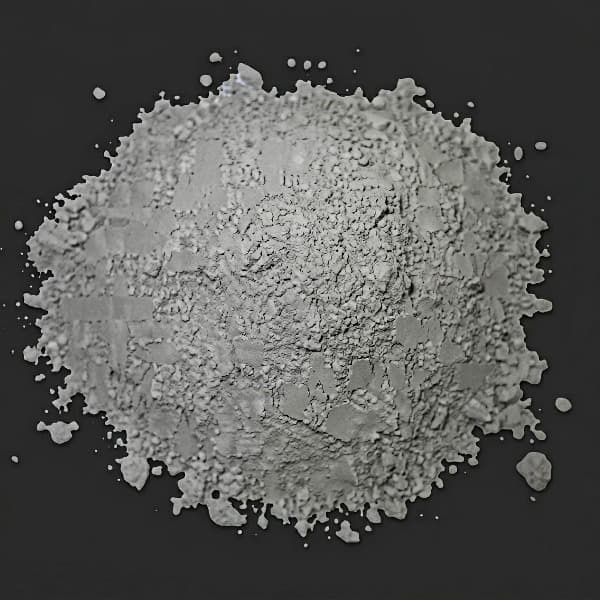
1. Castable refractory
A castable is a flowable refractory mixed with water and either poured into formwork or gunned into place. It can be applied to complex shapes and, having no joints, gives excellent tightness.
- Service temperature: 1000–1800°C (by alumina content)
- Alumina (Al₂O₃) content: 35–99% — the higher the content, the better the heat resistance
- Installation: casting, gunning or ramming
- A monolithic structure with no joints — excellent tightness and erosion resistance
- Freely applied to complex furnace geometry and curved surfaces
- Main uses: incinerator, heat-treatment and firing furnace walls, burner blocks, exhaust duct linings
2. Fire brick
Fire brick is a standard-sized brick fired at high temperature. It is simple to install and easy to replace, suiting the regular geometry of blast furnaces, coke ovens and glass melters.
- Types: fireclay (SK-32 to 38), high alumina (Al₂O₃ 45–99%), silica, magnesia
- Service temperature: 1200°C to over 1800°C (by type)
- A standard product — requires jointing, used with refractory mortar
- Easy to replace — only the damaged bricks need changing
- Excellent mechanical strength — suited to heavily loaded structures
- Main uses: walls of blast furnaces, electric arc furnaces, coke ovens and glass melters
3. Refractory mortar
- Made specifically for filling and bonding fire brick joints
- Two types: air-setting and heat-setting
- Service temperature: up to 1700°C (by alumina content)
- Joint thickness: 1–3 mm recommended — thinner gives better strength and tightness
- Main uses: fire brick construction, crack repair
4. Refractory board
- Fibrous refractories such as Cerakwool and silica formed into board
- Light — one-third to one-fifth the weight of castable or fire brick
- Easy to work — cut and drilled
- Service temperature: up to 1430°C
- Main uses: refractory linings for furnace doors and inspection hatches, lightweight insulating panels
Choosing a refractory
| Complex shapes, jointless installation | Castable — cast or gunned |
| Heavy structural load, easy replacement | Fire brick with refractory mortar |
| Weight saving, machinability needed | Refractory board (Cerakwool based) |
| Repairing cracks and damage | Refractory mortar, ceramic bond, Super 3000 |
| Extreme temperature above 1600°C | High-alumina castable or high-alumina fire brick |
✅Tell us the equipment, its operating temperature, the geometry involved (flat, curved, complex) and the current condition, and we will recommend the right combination of refractories. Technical advice: +82 10-4266-9745
Need a product quote or technical advice?
Our specialists will respond with a quotation quickly
Related Technical Guides
Technical Guide
Silica Materials — Fabrics, Felts and Ropes for Service Above 1000°C
Technical Guide
Rigidizers, Ceramic Bonds and Hardeners — Surface Strengthening for Insulation
Technical Guide
Glasswool vs Mineral Wool vs Cerakwool — Choosing Insulation by Temperature
Technical Guide
HVAC Duct Insulation and Acoustics — Internal Lining vs External Wrap