
However well a unit is insulated, heat leaking through door gaps, flange joints and inspection-hatch edges drags efficiency down. Those spots call for sealing materials, not insulation. The right seal depends not only on temperature but also on compression recovery, how often the joint is opened, and whether it has to hold pressure.
Three questions for choosing a seal
- How hot is it — the actual temperature where the seal sits, not the furnace interior temperature
- How often is it opened — doors and hatches that are compressed repeatedly need good recovery
- Does it hold pressure — whether it must contain fluid pressure, as on pipe flanges and valves, or only stop heat and smoke
Materials compared
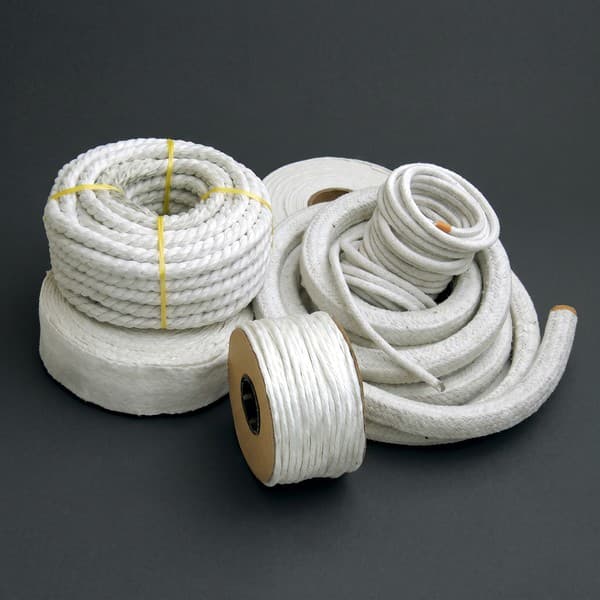
| Ceramic rope / ceramic packing | Up to 1,260°C. Round, square and braided forms. Kiln and furnace door seals, hot flange packing, expansion joint filling |
| Silica rope | High-purity silica for continuous service around 1,000°C. Where ceramic fiber is unwelcome, and for continuous hot sealing |
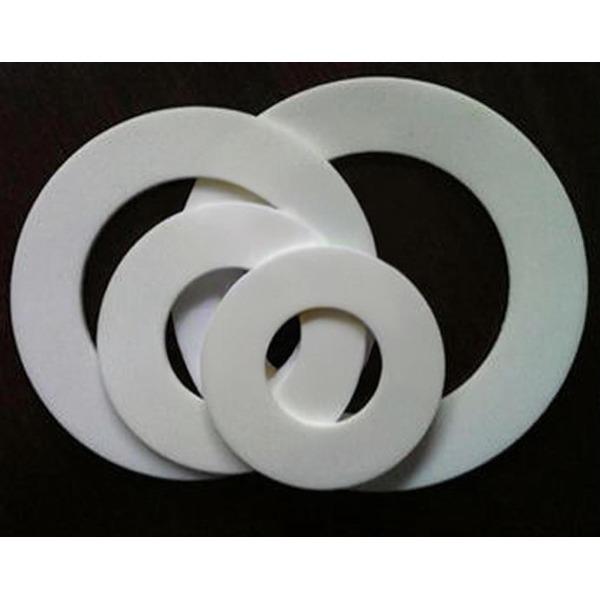
| Ceramic paper | Up to 1,260°C. Thin sheet from 0.5 mm. Flat gaskets, thin seals and insulating liners — custom cutting available |
| Silicone packing / silicone foam | -60 to 200°C (250°C short-term). Very elastic — suits oven and dryer doors that open and close often |
| Asbestos-free gland packing | 260–450°C depending on material. Stops fluid leakage at valve stems and pump shafts — for pressure sealing |
Recommended choices by location
| Kiln and firing-furnace doors | Ceramic rope (braided or square) — pressed into the door groove and fixed with high-temperature inorganic adhesive |
| Heat-treatment furnace hatches and sight ports | Ceramic rope or ceramic paper gasket |
| Hot duct and flue flanges | Ceramic paper cut gaskets or ceramic tape — suited to flat joints |
| Oven, dryer and paint-booth doors | Silicone packing (hollow or foam profile) — keeps its recovery through repeated opening |
| Valve stems and pump shafts | Asbestos-free gland packing — chosen for the fluid, temperature and pressure |
| Burner and heater mounts | Ceramic paper or molded ceramic gasket — doubles as a thermal break |
⚠️Ceramic rope and ceramic paper seal against heat and smoke; they are not pressure gaskets. Flanges under pressure — steam, gas or oil lines — need a pressure-rated gasket suited to that pressure and fluid. Penetrations through statutory fire compartments must use a certified firestop system.
What we need for custom-cut seals
- Gasket outer and inner diameter, number and diameter of bolt holes, and PCD (bolt circle diameter) — from a drawing or measurements
- For rope: the groove width and depth and the total perimeter length
- The maximum temperature at the seal and how often it is opened
- Thickness — where a compressed thickness is required, allow for the compression ratio
- Quantity and replacement interval — for routine replacements, making spares at the same time is more efficient
✅No drawing? That's fine. The old gasket, or a photo with tape-measure dimensions, is enough to work out the shape — we can also measure the gasket and cut it to fit.
💡Send a photo of the sealing point, its temperature and rough dimensions, and we will recommend the right material and size from ceramic rope, ceramic paper, silicone packing and gland packing. Ceramic paper is available custom-cut, and we can measure gaskets and supply them cut to fit. Technical support: +82 10-4266-9745
Need a product quote or technical advice?
Our specialists will respond with a quotation quickly
Related Technical Guides
Technical Guide
Identifying Asbestos Insulation and Replacing It — A Checklist for Ageing Plant
Technical Guide
HVAC Duct Insulation and Acoustics — Internal Lining vs External Wrap
Technical Guide
Refractories Explained — Castables, Fire Brick and Refractory Mortar
Technical Guide
Electrical Insulation Materials Compared — Mica, Epoxy, Ceramic Board and Silicone Rubber