
Electrical insulation blocks current from taking an unintended path, preventing shock, short circuits and fire. On industrial sites it must usually do more than simply not conduct — heat resistance, high-voltage capability, chemical resistance and mechanical strength are often required together. This guide sets out the properties of the main industrial insulators: mica, epoxy, ceramic board and others.
The key metrics
| Dielectric strength (kV/mm) | The maximum voltage withstood per unit thickness. Higher means high-voltage insulation at less thickness. |
| Volume resistivity (Ω·cm) | The electrical resistance within the material. Higher means less leakage current. A good insulator: 10¹⁴ Ω·cm or more. |
| Heat resistance (°C) | The maximum temperature at which insulating performance holds. Hotter environments need a higher thermal class. |
| UL thermal class | Class A (105°C) / E (120°C) / B (130°C) / F (155°C) / H (180°C) / C (above 180°C) |
1. Mica
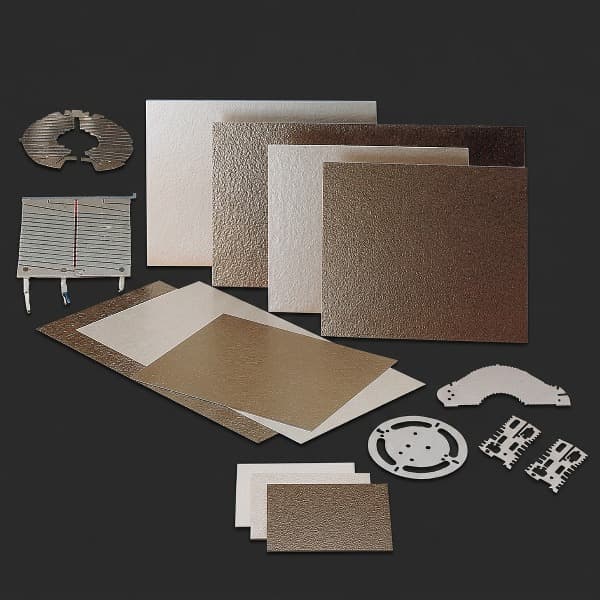
Mica is an inorganic electrical insulator made from the natural mineral of the same name. It is one of the few materials that retains insulating performance at high temperature, which makes it particularly important in fire and high-heat environments.
- Heat resistance: 500–1000°C (by grade)
- Dielectric strength: 15–25 kV/mm
- Volume resistivity: 10¹³–10¹⁵ Ω·cm
- Forms: mica sheet, mica tape, mica board, mica tube
- Non-combustible — does not burn or melt, retaining insulation even in flame
- Main uses: insulation in electric furnaces and industrial heaters, generator and motor winding insulation, the inner layer of fire-rated cable, wiring protection in incinerators
2. Epoxy insulation board (FR-4 / G-10)
A composite made by impregnating glass fiber with epoxy resin. Excellent machinability and high mechanical strength make it the most widely used material for industrial insulating components.
- Heat resistance: 130–180°C (Class B to H, by grade)
- Dielectric strength: 15–20 kV/mm
- Volume resistivity: 10¹³–10¹⁶ Ω·cm
- Forms: board, rod, tube, custom machined parts
- Excellent machinability — easily CNC cut, drilled and tapped
- High mechanical strength — suitable for bolted assemblies and structural insulating parts
- Main uses: switchboard insulating barriers, transformer insulating components, high-voltage switchgear, PCB substrate material (FR-4)
3. Ceramic insulation board
An insulator made from ceramics such as alumina (Al₂O₃) and aluminum nitride (AlN). Heat and chemical resistance are exceptional, but it is brittle, so impact must be avoided.
- Heat resistance: 800–1600°C (by material)
- Dielectric strength: 10–30 kV/mm
- Volume resistivity: 10¹³–10¹⁶ Ω·cm at ambient, falling at temperature
- High thermal conductivity — also used as heat-dissipating and power semiconductor substrates (AlN)
- Forms: board, plate, cylinder, custom shapes
- Main uses: insulating supports inside electric furnaces, semiconductor manufacturing equipment, heat-dissipating substrates, high-temperature heater insulation
4. Silicone rubber insulation
Silicone rubber combines flexibility with heat resistance, making it suitable where a rigid insulator will not fit the geometry or where there is vibration.
- Heat resistance: −60°C to +230°C (300°C peak)
- Dielectric strength: 15–25 kV/mm
- Excellent flexibility — absorbs vibration and impact and conforms to complex shapes
- Excellent ozone, UV and moisture resistance — suitable outdoors
- Forms: sheet, tube, sleeve, sponge, moulded parts, insulating tape
- Main uses: cable sheathing, protective sleeving for high-voltage components, transformer insulation pads, sealing on outdoor electrical equipment
5. Polyimide film (Kapton®)
Polyimide (PI) film, developed by DuPont, delivers high dielectric strength and heat resistance in a very thin film.
- Heat resistance: −269°C to +400°C, covering cryogenic through to high temperature
- Dielectric strength: 150–300 kV/mm — the best in its class
- Thickness: 0.012–0.125 mm (ultra-thin)
- Excellent radiation and chemical resistance
- Forms: film, adhesive tape, tube, laminate
- Main uses: motor and generator winding insulation, flexible printed circuits (FPCB), aerospace insulation, insulation in semiconductor processes
6. Glass fiber sleeving and tape
Woven and braided glass fiber sleeving and tape are used widely to protect cable and provide high-temperature electrical insulation.
- Heat resistance: 200–1000°C (by coating)
- Forms: sleeving (braided or heat-shrink), tape, thread, rope
- Coatings: silicone (300°C), acrylic (200°C), varnish
- Flexible, making cable protection and bundling straightforward
- Main uses: industrial wiring protection, heater wiring insulation, wiring sleeves inside electric furnaces
Overall comparison
| Mica | 1000°C / 25 kV/mm / non-combustible / best for high-heat and flame environments |
| Epoxy board (FR-4) | 180°C / 20 kV/mm / best machinability / structural components |
| Ceramic board | 1600°C / 30 kV/mm / high-temperature supports and heat-dissipating substrates |
| Silicone rubber | 230°C / 25 kV/mm / flexible / vibration and outdoor environments |
| Polyimide (Kapton) | 400°C / 300 kV/mm / ultra-thin / windings and FPCB |
| Glass fiber sleeving | 200–1000°C / flexible / wiring protection and high-temperature sleeves |
Recommendations by environment
- Electrical insulation above 500°C → mica sheet or tape
- Electric furnace and incinerator insulation above 800°C → ceramic board with mica
- Insulating parts that must be machined (drilled, cut) → epoxy board (FR-4 / G-10)
- Vibration, impact or outdoor exposure → silicone rubber sheet or sleeving
- Ultra-thin high-voltage insulation (motor windings and similar) → polyimide (Kapton) film
- High-temperature wiring sleeves and cable protection → silicone-coated glass fiber sleeving
💡Electrical insulation must be chosen against voltage, temperature and environment (chemical resistance, waterproofing, vibration) together. If the choice is difficult, tell us your service conditions. Technical advice: +82 10-4266-9745
Need a product quote or technical advice?
Our specialists will respond with a quotation quickly
Related Technical Guides
Technical Guide
Teflon vs Silicone vs Carbon Coated Cloth — Choosing High-Temperature Fabrics
Product Guide
What Is High-Temperature Canvas? Types, Materials and Applications
Technical Guide
Silica Materials — Fabrics, Felts and Ropes for Service Above 1000°C
Technical Guide
HVAC Duct Insulation and Acoustics — Internal Lining vs External Wrap