
Pipework and ductwork expand and contract as temperature changes. If that movement is not absorbed, connections fail or the seal is lost. High-temperature canvas — a flexible connector — is the heat-resistant fabric joint that absorbs this thermal movement while keeping the system gas-tight. It is also called a canvas joint, flexible joint or expansion canvas.
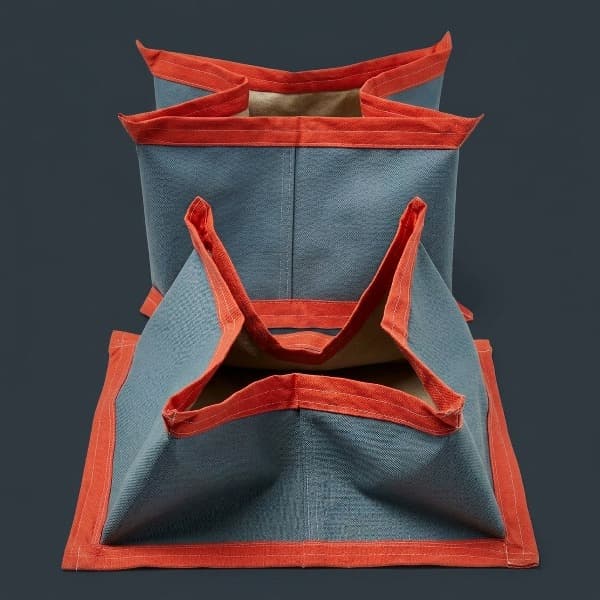
Why high-temperature canvas is needed
- Absorbs thermal expansion — metal duct expands about 1.2 mm/m per 100°C, risking failure if connected rigidly
- Isolates vibration — stops fan, blower and pump vibration transmitting into ducts and pipework
- Reduces noise — vibration isolation also reduces noise transmission
- Maintains the seal — blocks fluid and gas leakage through expansion and contraction
- Absorbs installation tolerance — compensates for misalignment during installation
Types by material
1. Silicone coated canvas
- Service temperature: −60°C to +300°C (450°C peak)
- Silicone rubber coated onto a glass fiber substrate
- Excellent flexibility and waterproofing, suitable for outdoor installation
- Strong against oil and steam contact
- Colours: red, grey, white
- The most general-purpose high-temperature canvas — the industrial standard
- Uses: industrial duct expansion joints, HVAC systems, incinerator flue joints
2. Teflon coated canvas (PTFE)
- Service temperature: −70°C to +260°C
- PTFE (Teflon) coated onto a glass fiber substrate
- The best chemical resistance — for acid, alkali and solvent contact
- Non-stick — no dust or debris adhesion
- Suitable for connections in food, pharmaceutical and chemical plants
- Colours: white, brown
- Uses: chemical ducts, incinerator exhaust lines, connections in food processing facilities
3. Silica canvas
- Service temperature: ambient to +1000°C (1200°C peak)
- Woven from high-purity silicon dioxide (SiO₂) fiber
- Purely inorganic, withstanding over 1000°C without any coating
- Flexible enough to install on complex shapes
- Excellent acid resistance
- Colours: white to off-white
- Uses: flue joints on incinerators, furnaces and heat-treatment plant, 1000°C-class duct expansion joints
4. Kevlar (aramid) canvas
- Service temperature: ambient to +450°C (600°C peak)
- A high-strength heat-resistant fabric based on aramid (Kevlar®) fiber
- Outstanding tensile strength — the strongest in its class
- Excellent abrasion and cut resistance
- Minimises tearing risk in high-vibration, high-pressure service
- Colour: its distinctive gold
- Uses: high-pressure and high-vibration duct joints, expansion joints in abrasive service, power station flues
5. Ceramic fiber canvas
- Service temperature: ambient to +1260°C
- Woven from ceramic (Al₂O₃ + SiO₂) fiber
- Handles higher temperatures than silica canvas
- Excellent thermal shock resistance — for repeated rapid heating and cooling
- Colour: white
- Uses: flue joints above 1000°C on incinerators, furnaces and petrochemical plant
At a glance
| Silicone coated | To 300°C / waterproof and flexible / general industrial ductwork — the most common |
| Teflon (PTFE) | To 260°C / best chemical resistance / chemical, food and pharmaceutical lines |
| Silica | To 1000°C / purely inorganic / incinerators and heat-treatment furnaces |
| Kevlar (aramid) | To 450°C / high strength and abrasion resistance / high-pressure and high-vibration service |
| Ceramic fiber | To 1260°C / extreme temperature / furnaces and petrochemical plant |
Installation — flanged connection
High-temperature canvas is clamped between the flanges at each end of the duct or pipe and bolted through. The canvas width — the effective movement length — is set by the expected expansion and vibration amplitude of the installation, typically designed between 50 mm and 200 mm. In hot service, using a heat-resistant gasket alongside improves the seal further.
Selection summary
- General industrial ductwork, HVAC and steam lines (below 300°C) → silicone coated canvas
- Pipework in contact with chemicals, acids or alkalis → Teflon (PTFE) canvas
- Incinerator and heat-treatment flues below 1000°C → silica canvas
- High-pressure, high-vibration, abrasive service → Kevlar (aramid) canvas
- Extreme temperature above 1000°C → ceramic fiber canvas
- Outdoor installation exposed to rain → silicone coated (best waterproofing)
✅Tell us the service temperature, duct size (width × height, or diameter), the fluid and the location (indoor or outdoor) and we will specify the right canvas material and width. Technical advice: +82 10-4266-9745
Need a product quote or technical advice?
Our specialists will respond with a quotation quickly
Related Technical Guides
Technical Guide
Electrical Insulation Materials Compared — Mica, Epoxy, Ceramic Board and Silicone Rubber
Technical Guide
Teflon vs Silicone vs Carbon Coated Cloth — Choosing High-Temperature Fabrics
Product Guide
Robot Insulation Jackets — Protective Covers for Industrial Robots
Product Guide
What Is a Removable Insulation Jacket (4R Cover)? Five Things to Know Before Ordering