
A large share of fires in factories and on construction sites start from welding and cutting sparks. Sparks travel further than people expect, and they can lodge in gaps or inside insulation and ignite well after the work is done. That is why the basics before any hot work are to clear combustibles and cover what remains with a welding blanket. The catch is that not every fire blanket is the same fabric.
⚠️Occupational safety rules require spark-containment measures and a fire watch for hot work such as welding and cutting. A welding blanket is a key tool for that — it does not replace removing combustibles or keeping a fire watch.
Comparison by material
| Fiberglass cloth | Most economical. Stops ordinary sparks and spatter. Limited for sustained heat — suited to work with light spark fall |
| Silicone- or acrylic-coated fiberglass | Coating reduces fiber shedding and toughens the surface for repeated use. The coating can discolor and smoke at high heat |
| Silica cloth (high-purity SiO₂) | Continuous service around 1,000°C. For cutting and gouging where large molten globules fall, and as a catch layer directly under the weld |
| Ceramic cloth | Rated above 1,000°C. For protection around hot equipment and fire curtains |
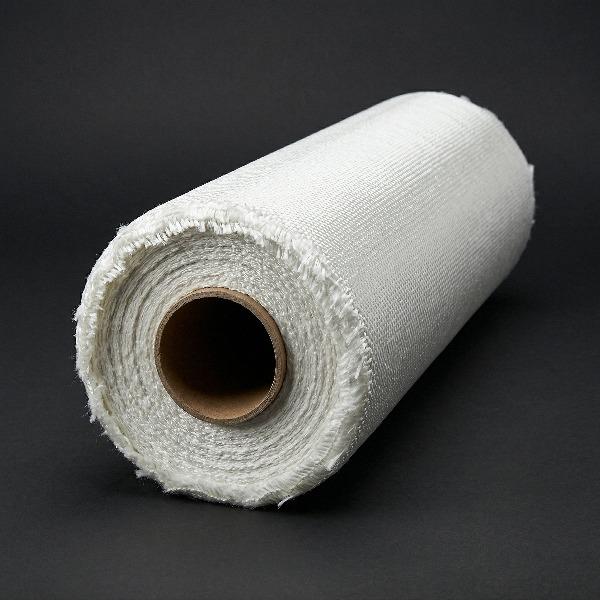
Choosing by type of work
| General arc and MIG welding | Coated fiberglass blanket — to cover floors, equipment and insulation nearby |
| Gas and plasma cutting | Silica cloth — at the catch point where molten metal drops directly |
| Arc gouging and heavy structural cutting | Heavy-gauge silica cloth, laid double underneath |
| Work near insulation or ductwork | Silica or coated cloth wrapped right over insulation openings — so sparks cannot burrow into the insulation |
| Permanent fire partitions | Curtain-type blankets with eyelets — welding booth screens and equipment separation |
✅The most common mistake is laying thin, plain fiberglass cloth directly under a cutting job. When molten metal lands on it, the cloth melts through and sparks pass straight underneath. Wherever large globules fall, use silica cloth.
What to check before buying and using
- Distinguish the cloth's continuous service temperature from its short-term heat resistance
- Thickness and weight (g/m²) — within the same material, heavier cloth withstands larger spatter
- Edge finish — without overlocking or hemming, the cloth frays in use
- Eyelets — essential if the blanket will be hung as a curtain
- Replace a blanket immediately once it is holed or charred — sparks pass through a single small hole
- A blanket covers what is left after combustibles are removed — do not simply cover combustibles and weld
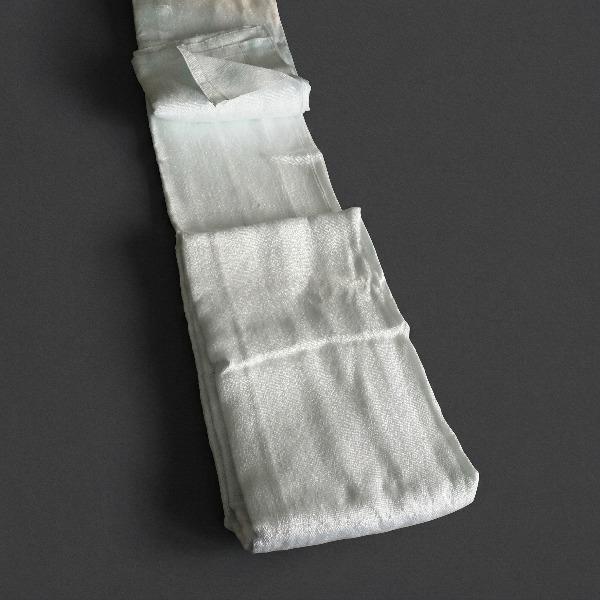
💡Tell us the type of work (welding, cutting or gouging), the size and quantity needed, and whether you need a curtain type, and we will recommend the right cloth and thickness. We supply roll goods and also make blankets to size with cutting, edge finishing and eyelets. Technical support: +82 10-4266-9745
Need a product quote or technical advice?
Our specialists will respond with a quotation quickly
Related Technical Guides
Product Guide
Mineral Wool (Rock Wool) Explained — How It Differs from Glasswool and When to Use It
Product Guide
Robot Insulation Jackets — Protective Covers for Industrial Robots
Product Guide
What Is High-Temperature Canvas? Types, Materials and Applications
Technical Guide
Sealing High-Temperature Equipment — Ceramic Rope, Ceramic Paper, Silicone and Gland Packing