
Carbon materials are unmatched where high temperature, light weight and high strength are all required at once. The technology began in aerospace and is spreading quickly into industrial high-temperature insulation, electric furnaces, semiconductor processes and hydrogen energy plant. This guide sets out the types and properties of carbon-family insulation.
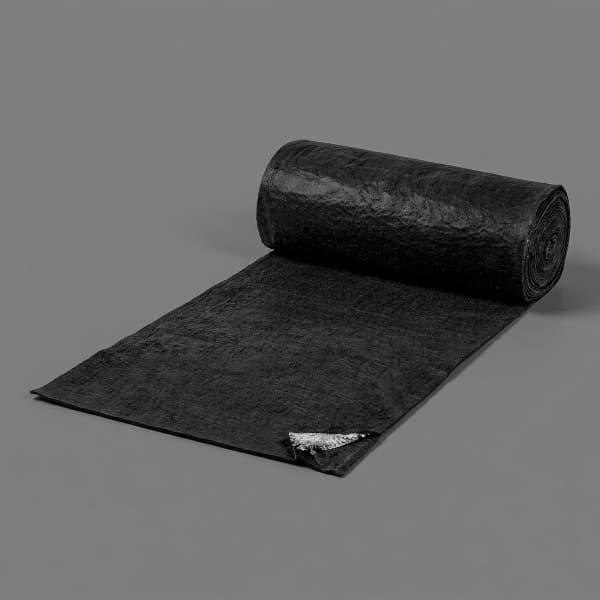
What carbon insulation has in common
- Extreme heat resistance — usable above 2000°C in inert gas or vacuum atmospheres
- Light weight — 40–60% lighter than ceramic insulation of the same size
- Very low thermal expansion — dimensionally stable through repeated rapid heating and cooling
- Electrically conductive — usable where earthing or static dissipation is needed
- Oxidation caution — it begins oxidising above 400–500°C in air, so an inert atmosphere or a coating is required
1. Carbon fiber insulation
Carbon fiber formed into felt, blanket or board. It is the material most used for insulating industrial high-temperature heat-treatment equipment such as vacuum furnaces, sintering furnaces and hydrogen reduction furnaces.
- Service temperature: up to 2000°C (vacuum or inert gas atmosphere)
- Thermal conductivity: 0.1–0.5 W/mK, staying low even at temperature
- Density: 0.08–0.20 g/cm³ — far lighter than Cerakwool
- Forms: felt, board, roll, moulded parts
- Excellent chemical resistance — strong against most acids and alkalis, except strong oxidisers
- Main uses: insulation in vacuum, sintering and carbonising furnaces, semiconductor epitaxy equipment, hydrogen reduction furnaces
2. Graphite board and block
Graphite is a crystalline form of carbon combining high thermal conductivity with lubricity. It is used mainly as a high-temperature structural and heat-spreading material rather than as insulation, though it can serve an insulating role as a heat-resistant component inside hot equipment.
- Service temperature: up to 3000°C (vacuum or inert atmosphere)
- Thermal conductivity: high (100–400 W/mK) — for heat spreading and temperature uniformity rather than insulation
- Excellent mechanical strength — high compressive and flexural strength
- Self-lubricating — suited to sliding components at temperature
- Forms: board, block, rod, expanded graphite
- Main uses: electric furnace electrodes, high-temperature jigs and fixtures, expanded graphite gaskets, high-temperature seals
3. Carbon foam
Carbon formed into a foam structure. Its porosity gives excellent insulation at low density, and it is structurally stronger than carbon fiber felt, so it is easier to machine to shape.
- Service temperature: up to 1800°C (inert atmosphere)
- Thermal conductivity: 0.05–0.20 W/mK — the best insulating performance among carbon materials
- Density: 0.03–0.50 g/cm³ (selectable)
- Mechanical strength: higher than carbon fiber felt, and CNC machinable
- Forms: block, sheet, custom moulded
- Main uses: aerospace high-temperature insulating structures, fuel cell separators, high-temperature battery thermal management
4. Carbon coated fabric
A heat-resistant fabric with a carbon (graphite) coating on a glass fiber substrate, used as an insulation cover skin where conductivity and static dissipation are required.
- Service temperature: ambient to 500°C
- Anti-static — for explosion-risk environments and pipe covers near cleanrooms
- Electrically conductive — also used for EMI shielding
- Combines heat resistance with conductivity — a specialist insulation jacket skin
- Black appearance
- Main uses: anti-static duct covers, specialist insulation jacket skins, high-temperature electrical shielding
5. Carbon-carbon (C/C) composite
A high-performance composite in which carbon fiber is impregnated and sintered in a carbon matrix. It is used mainly as an extreme-temperature structural material, but also as insulating structural parts such as heat shields and nozzles.
- Service temperature: up to 3000°C (vacuum or inert atmosphere)
- Best-in-class specific strength — four to five times the strength of steel at one-fifth the density
- Very low thermal expansion — maintaining integrity through sharp temperature change
- Main uses: rocket nozzles, space shuttle heat shield tiles, high-temperature brake discs, semiconductor diffusion furnace components
Carbon insulation compared
| Carbon fiber felt / board | To 2000°C / light / low λ / the standard for vacuum and sintering furnace insulation |
| Graphite board / block | To 3000°C / high conductivity / electrodes, jigs and heat-spreading structures |
| Carbon foam | To 1800°C / porous with excellent insulation / CNC machinable |
| Carbon coated cloth | To 500°C / anti-static and EMI shielding / insulation jacket skins |
| C/C composite | To 3000°C / extreme strength / aerospace and semiconductor components |
Oxidation — the critical caution with carbon
Carbon reacts with oxygen and oxidises (burns) above 400–500°C in air. For high-temperature service, at least one of the following conditions must be met.
- Vacuum — excluding oxygen prevents oxidation
- Inert gas atmosphere (nitrogen or argon) — controlling oxygen concentration
- An oxidation-resistant coating — SiC and similar coatings allow high-temperature use in air
- Products such as carbon coated cloth used below 500°C can be used in air
⚠️Carbon insulation must be selected only after confirming the environment (air, vacuum or inert gas) and the temperature. Used hot in air, it will oxidise and fail. We will advise on the right material and whether a coating is needed. Technical advice: +82 10-4266-9745
Need a product quote or technical advice?
Our specialists will respond with a quotation quickly
Related Technical Guides
Technical Guide
Teflon vs Silicone vs Carbon Coated Cloth — Choosing High-Temperature Fabrics
Technical Guide
Steam Pipe Insulation — Cutting Heat Loss and Energy Cost
Technical Guide
Insulation by Industry — Petrochemical, Power, Food, Semiconductor and Shipbuilding
Technical Guide
Electrical Insulation Materials Compared — Mica, Epoxy, Ceramic Board and Silicone Rubber